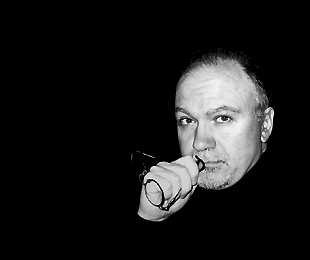
Jazz and improvisational pianist with some classic as well as modern inspiration, Bourget “displays impressive technical qualities and shows inexhaustible creative inspiration. An energetic music, extremely dense, as well as uncommon harmonic richness” (Pierre Boulet).
“Bourget's music is very introspective. His piano playing can be fast paced and intense, or very lyrical and melodic. Either way, you'll find that it can really soothe your soul. ” (Jazzfrisson)
ABOUT SECOND TIME FROM CLAUDE MARC BOURGET, BY ANA ISABEL ORDONEZ
Pianist Claude Marc Bourget decided to come back to the spotlight with a magical release where improvisation and avant-garde jazz smoothly immixes into a surely mellifluous set played with his audacious musical spirit.
The album strikes up this creation with a delightful “Opening”. Delineating poignant melodies, Bourget engrafts an explicit perimeter into the grand programme via his phrasing and clamouring tones. Withal, Bourget deploys here a great deal of energy throughout these generally thrilling journeys. On “Second Time” he furnishes a contemporary styled pace, mixing it all up with classical connotations. In addition, Claude-Marc Bourget fuses rhythmic, but also long silent spaces with picturesque melodies during many of these tracks. Au fond, Bourget merrily clasps the extraneous realm of concerns with visceral crescendos.
The Canadian pianist eventually boosts his freedom of movement with classical soundscapes, often pointed with ample improvisational moments. This album transmits a reckless outlook, sporadically toned down with ambient interludes. Overall, Bourget’s Second Time is a brave, yet remarkably lucid production translating into a highly approachable jazz album. For a second time, after many years of being out of the spotlight of music, Bourget has succeeded in what is not always easily attainable !
“Emotional, uninhibited,
and hauntingly beautiful.”
Susan Frances, Jazz Review
Bourget creates a balance between the deposits of rage and peacefulness in nature. His compositions channel the moods which guide nature’s course, and draws out its beauty even when confronted with its darker, brooding tirades. Second Time demonstrates Bourget’s agility as a pianist, and skillfulness to convey nature’s messages to audiences. He shows a desire for challenges, and a need to master them. (JazzTimes) /
Read the full review by Susan Frances.
"The intensity of the music and the quality of the recording pull you into the music, until you feel almost as if you are sitting alone in a concert hall. (...) No matter whether you are solo piano aficionado or not, Bourget’s sound is enthralling. His technical and creative facilities alone are admirable, but the sheer intensity of his music is enough to draw the most callused listener in. When so much music follows set forms of conformity and repeating phrases, it’s easy to get lost in the long, full themes that seem to never end. I am not traditionally a fan of solo piano works, and I probably won’t go out and buy any right away, but this album will definitely have a spot in my listening library." (Jazz Review).
/
Read the full review by Lorelei Clarke.
“ Bourget’s compositions are strictly focused as well as free to soar as high as the creative imagination will allow and sink as low as the heart’s emotional abyss. Through the episodes of deep contemplation and mesmerizing flights, Bourget exhibits impressive maturity that causes people to stop in their tracks and listen to him. (...) His long stretches of wanderings wicked by the piano keys seem mysteriously guided, as even the moments of transgressions manage to stay on course like they are under a trance, which stops them from trailing away from their objective, and every track resounds with an objective in mind. (...) His album Second Time shows his skills as a virtuoso on the piano, but also as a masterful composer and arranger. At 52 years of age, Bourget does not seem to want to turn back time, but to move ahead with it, as Second Time embraces huge challenges and tests Bourget’s reflexes to move spontaneously along the changing tides.” (Jazz Review).
/
Read the full review by Susan Frances.
« Bourget est un pianiste exigeant. Introspectif par moment, plus exubérant sur certains morceaux, il nous fait vivre toute une gamme d'émotions. Il faut se laisser envelopper par sa musique, dont l'émotion se dévoile par couches successives comme l'aube naissante révèle les détails qui nous entourent. La musique de Bourget est majestueuse, vecteur de tous les chagrins, joies et espoirs qui y transitent sereinement. » (Jazz Frisson). /Lire le billet complet.
« Ce qui est trop robuste se ferme à la grâce et à l’enseignement inconnu,
À la surprise, à la décision providentielle, à la merveille imprévue,
À la langue nouvelle,
À tout ce qui est encore illisible, mystérieux, enveloppé,
Aux dards adorables qui blessent et exaucent.»
Jean Renaud
“ What is too robust is closed to the grace and to the unknown teaching,
To the surprise, to the providential decision, to the unexpected wonder,
To the new language,
To all that is still illegible, mysterious, shrouded,
To adorable stings which wound and grant.”
Jean Renaud
«
On apprend à préparer, non à inventer; à continuer, non à commencer;
à prévoir, non à créer; il n'y a pas plus de règles pour improviser
que pour inventer ou pour vouloir, l'apprentissage étant toujours selon
l'intervalle, jamais selon le fait de l'instant. Incipere non discitur. »
Vladimir Jankelevitch
«Écrire la musique, aujourd’hui, à cettte heure, vaut-il encore ? Nous sommes allé, en Occident, aussi loin qu’il se puisse faire. Les écritures à venir se répètent déjà en puissance, tout de suite immobiles. Devant le "tout composé", montagne de sel à statue, au surplus avec un univers de machines et d’aides-machines, la mathématique musicale, comme le mauvais goût, sinon le bon et même l’instruction de l’écriture, la vieille honnêteté ou le génie de la composition, hier vainqueurs, sont blessés à mort et à l’âme, vaincus dans leur futur, sève et sang vidés dans les broyeurs logiciels, showbiznesques ou étato-universitaires. Seule l'improvisation, si elle a sa science et son art, sa mémoire et son éthique, sa Synthèse et sa réaction, peut échapper, échappe aux appareils de la surconstruction, du surhumain inutile, à l’Organe du robot chaque jour meilleur mais auquel est inaccessible la parfaite imperfection, c’est-à-dire la vie qui passe, meurt et revient, comme dans un jeu de cachette et d’amour avec le temps, son seul maître.»
Claude Marc Bourget Poétique de l'improvisation (à
paraître)